HAPPY THANKSGIVING (Italy Style) !!!

Ciao Readers!  And HAPPY TURKEY DAY!!!

Okay, I know I said I was working past my culture shock and the need to replicate state-side foods, but now it’s Thanksgiving!  I’m not a big traditionalist, but Thanksgiving is my most favorite holiday and filled with many personal traditions.  Except for the few years where folks have come to share the day with us, Thanksgiving usually goes something very close to this: we wake up early and get the turkey in the oven before Steve takes me to run some Thanksgiving-day-themed 5k (usually the “Turkey Trek” or “Hobbler Gobbler”); we get back and finish all the cooking (enough to feed way more than the 2 of us); we then get in our p.j.’s and watch a day-long marathon of holiday movies while we stuff ourselves (favorites include “Pee Wee’s Christmas Special” and “Scrooged”).  Now the question has been, how will we celebrate in Italy?

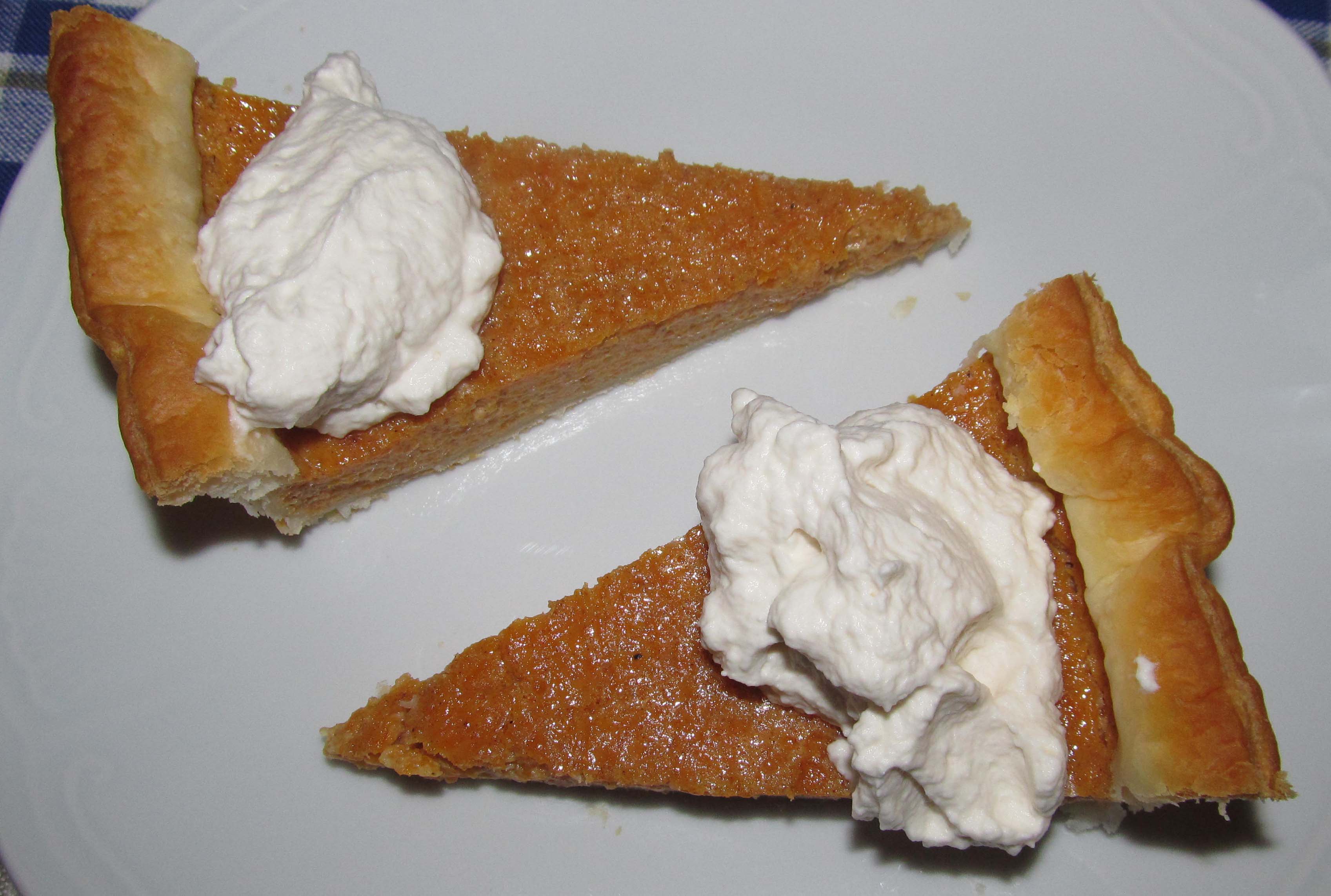
First off, clearly Thanksgiving is not a holiday here – Steve has to work and I’ll be going to school (not sure I mentioned, but I started back) – so Thursday is not going to cut it (though I do plan on setting my ipod/nike gadget for a 5K on Thursday and running my own Turkey Trek).  Mostly, though, we’ll be celebrating Thanksgiving a little late (which is okay – one year our families came for “fake” Thanksgiving a week late because it was easier for everyone to travel then).   However, while the date may be off, the food will be pretty darn close.  I started sourcing ingredients a couple of weeks ago.  And, since I wasn’t certain I was going to be able to get it all right, we had to have some “test runs.”   I made a test-run pumpkin pie with condensed milk from Vivi Market, using store-bought Butoni “pasta sfoglia” (puff pastry) for the crust and making my own pumpkin puree from a big chunk of a green pumpkin-like thing I got at the grocery (they actually sell Libby’s canned pumpkin at Vivi, but it is stupid expensive and the fresh stuff worked great!).  Steve beat the fresh cream by hand, and voila!  Not too shabby (photo of the pieces we shared with the Rosticerria guys):
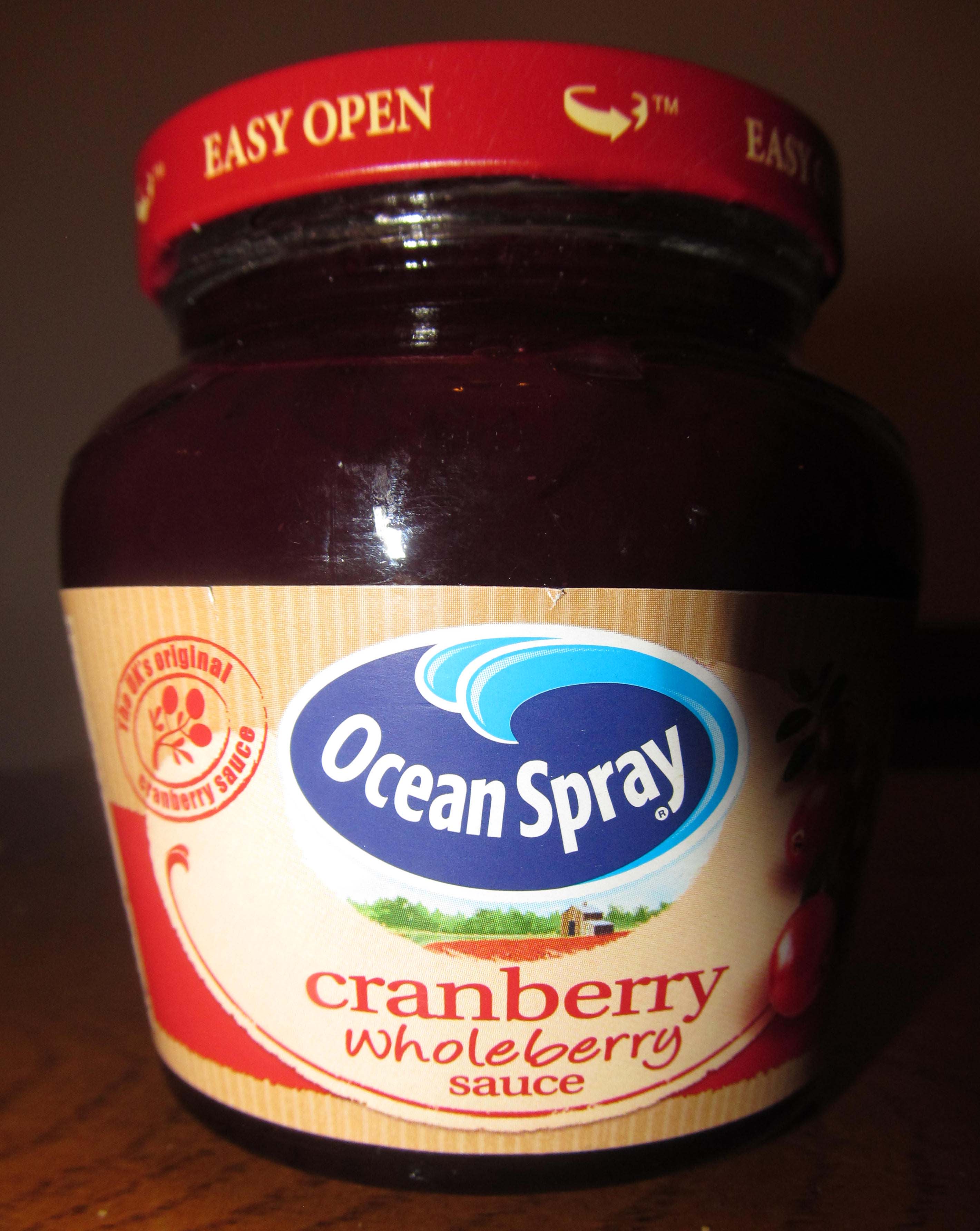
I didn’t think we were ever going to find yams as I’d been keeping an eye out for awhile, but whatd’ya know, at Mercato Centrale there is a small Central American food vendor tucked away in the back and they have them (also baked a couple of those for a test-run).  Turkey (parts) and potatoes and green beans are no problem (and they have great, fancy mushroom creams here to use with the green beans).  I planned very far ahead for the stuffing and brought a box mix for cornbread, to which we will add stale bread (adding day-old baguettes became a new tradition in 2008 when we were in Paris at Thanksgiving and that’s how I made stuffing) (alas, though, no green chiles – another personal traditional twist on stuffing).  The final piece of the puzzle was the cranberry sauce…. I tried and tried to source some fresh cranberries, but to no avail.  So, I broke down and bought one of these very tiny (very expensive) jars of ocean spray sauce at Vivi Market:
As for the holiday movie marathon, I actually brought those DVD’s, and while they don’t play on the Italian tv system, they do play on my laptop – so we will be spending “Thanksgiving” with Bill Murray, as always!

Whatever your own traditions, please have a warm and wonderful holiday! Cheers!
Ambling Along the Arno in Autumn

Ciao Readers! (And happy short-work-week to those of you back in the States; Thanksgiving post to follow Wednesday.)

In addition to the joy of even more alliteration (thanks for the “ambling” idea Steve), today you get to go on my morning run with me (you’ll have to add the ipod playlist on your end)!

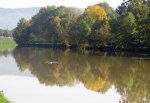
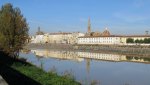
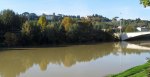
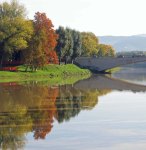
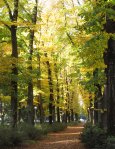
Fall is here and the leaves are starting to change color (while the grass remains that amazing shade of green).  As I’ve been going for my morning runs along the Arno, I have been thinking “wow, this is really pretty, I should bring my camera sometime.”  So, last week I did just that.  Instead of running, I walked (but still in my goofy American running clothes) and carried my camera.

Below are some shots in the park I walk through to get to the Arno and from the trail that runs along the river.  On my usual run I go east – headed out of town – those are the majority of the shots – where you don’t see much but trees.  But for you I also went west towards the center of town to get some cool building reflections on the water (I usually don’t run that way cause the trail is full of tourists blocking the path [of course, with that view, you can’t blame them]).  If you recall from my “Sundays in the Park Revisited” post, this is the same trail along which, should you decide to take a break from running, you can sit at a cafe on the river and have a cappuccino (or other beverage of your choice).  Thanks for coming on my walk with me!

Florence Fall Food Festival Photo Fun!

Ciao Readers!
Yes, the alliteration and food festivals continue!  There have pretty much been non-stop festivals since September, but apparently November is the month for even more festivities.  There is a month-long ongoing food and cultural festival in town – complete with lectures, art exhibits (stay tuned for a future blog), and of course – food!  It’s not only wine and olive harvest season, but the season of my most favorite delicacy – truffles!
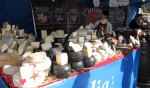
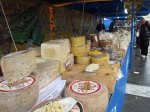
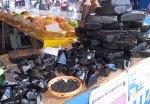
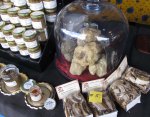
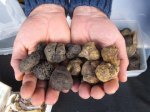
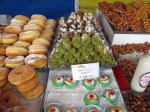
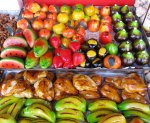
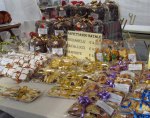
In addition to this big event, there are small food festivals popping up in different piazzas all the time.  The first weekend of November there was one in the piazza across from Sant’ Ambrogio market, which we discovered totally by accident when we went to do shopping.  This festival (pictured first, with red and blue tables) was off the tourist trail, so the tasting portions were more generous and the truffle guy even took time to “pose” his truffles for my photo (the next photos are from the festival in Piazza della Repubblica the following weekend).  We got this great spicy vegetable spread (pictured wrapped like a firecracker) and munched on yummy sweets from Sicily (also pictured).

Since I think this is definitely a case where a photo is worth more than words, I’ll stop talking and just let you see for yourself.  Enjoy!

Street Sign Art in Florence

Ciao Readers!

Just in case you were beginning to think (as I was) that all of the art in this city was created pre-1600, today’s post is for you!

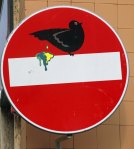
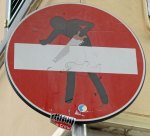
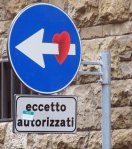
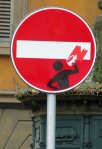
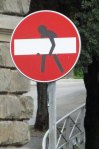
One day when I was on a tour with my old school, one of the other students pointed to a street sign and asked our teacher about it.  He thought she was pointing at a very old cross on a historical building and thus gave us a 5 minute lecture on its history.  However, what she was really asking about was street sign art (non-sanctioned, “guerrilla”) by “Clet.”  (When she re-pointed and asked the teacher again he just shrugged with disinterest and continued our tour).

Since that day I have learned that Clet is pretty famous here and I have even seen t-shirts with images of his signs.  Clet Abraham is a French artist who has been living in Florence for years and creates his street sign art by applying adhesives to the signs.  He has apparently been fined many times for his creations (but I am guessing the t-shirt sales and publicity cover the fines).  Whenever I see one of his signs in town (and I have remembered my camera) I stop and take a picture.  I know there are several other versions out there I have missed, but below are a sampling of some of the ones you can find all over town (they are repeated throughout the city).  You can find more information here and photos of many other signs here.

Fun stuff!

Cooking Like a Tuscan

Ciao Readers!

Now that my urge to cook foreign food has subsided, I have taken up trying to make quintessential Tuscan dishes!  I knew each region of Italy had its own food history and specialties, but I didn’t realize what an art form eating here really is.  I kinda had a general sense of “Italian food” but hadn’t realized the countless variations (and which ones are and are not native to our new home).  Take for instance basil and tomatoes – NOT Tuscan (found further South, like in Sicily). Risotto?  Nope, go North to Milan.  (Before I ran out of school time, I attended an afternoon class on Tuscan food traditions).

Tuscan food is based on bread.  And not just any bread – thick, unsalted bread (which no one else in Italy likes).  The cuisine is based on bread because that’s what the poor folks back in the middle ages could afford that would fill them up (they used to actually make the plates for the rich people out of bread, then eat the plates with the yummy tastey-bits afterwards – if I understood my teacher correctly….).  The bread is unsalted because…well, it depends who you ask.  According to common wisdom, the bread is unsalted because Tuscan food was heavily seasoned (back in the day before refrigeration it would cover the funky smell of old rabbit and boar, which the rich could afford to eat), and you don’t want salt in your bread to compete with salt in your food.  According to my former teacher (who does seem to know everything about Florentine culture pre-1600), that is a myth and the truth is that there was a high tax on salt back in the 1200’s, so everyone stopped using it in protest and it became a tradition which never died.  You can find both explanations on the internet, so take your pick.

Pretty much all of the food culture in Tuscany (like the art), was solidified by the end of the 16th century (gelato being the exception, soon followed).  The newest “traditional” addition was white beans, brought back by Columbus.  On a related note, one of the Medicis, Catherine, married a French dude (King Henry II) in the mid 1500’s and moved to Paris.  According to my teacher, much of what we consider traditional French cuisine was actually adapted from the Italian specialties Catherine’s cook (who she brought with her) made, such as crepes, bechamel and duck a l’orange.  (When I asked my teacher if Catherine brought any French foods back to Italy he unhesitatingly said “Non!”).

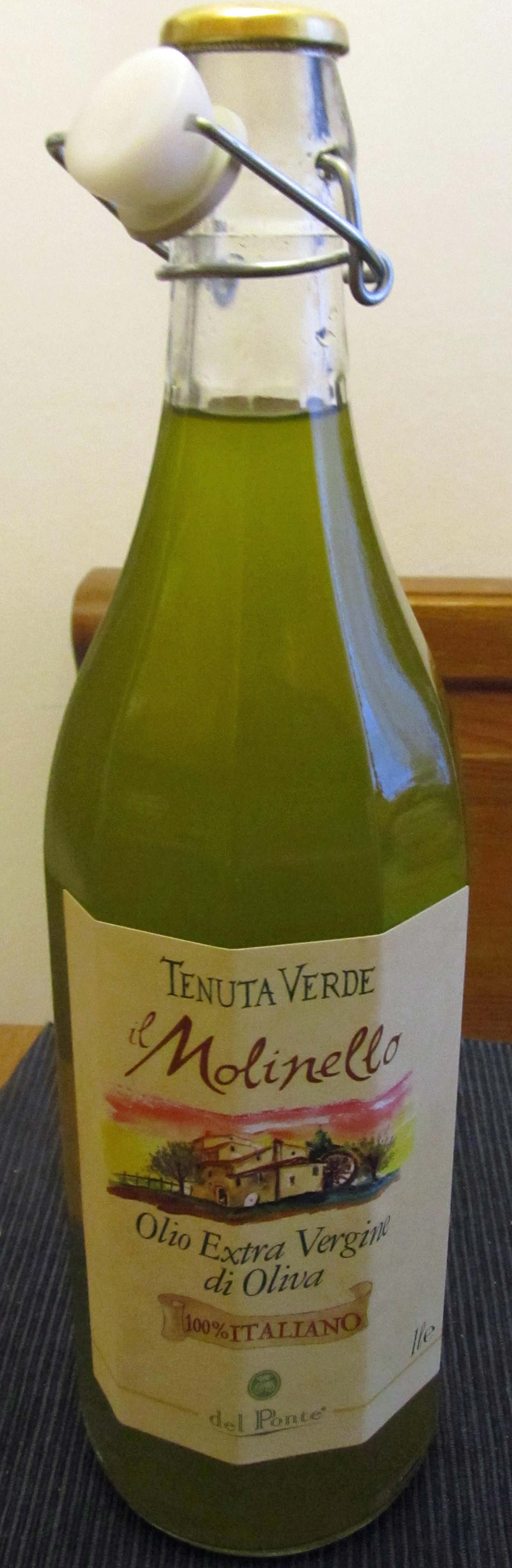
One of the many uses of Tuscan bread includes “fettunta,” – simple grilled bread rubbed with garlic and then covered by another Tuscan staple – olive oil.  But not any olive oil – fresh, newly pressed, unfiltered green olive oil.  Since we are in the middle of olive oil pressing season, this is THE time of the year to enjoy this simple tasty treat.  We bought some of this lovely green oil and made our own fettunta:

Another Tuscan bread staple is “ribollita” (literally “reboiled”) – a soup made with leftover veggies (but almost always carrots and either kale or cabbage), beans, and stale bread.  I had my first ribollita at a lovely lunch with a couple from Boston (who attended my school), so I know the one I made here was pretty darn close to the real deal (bread not pre-soaked for display purposes only):

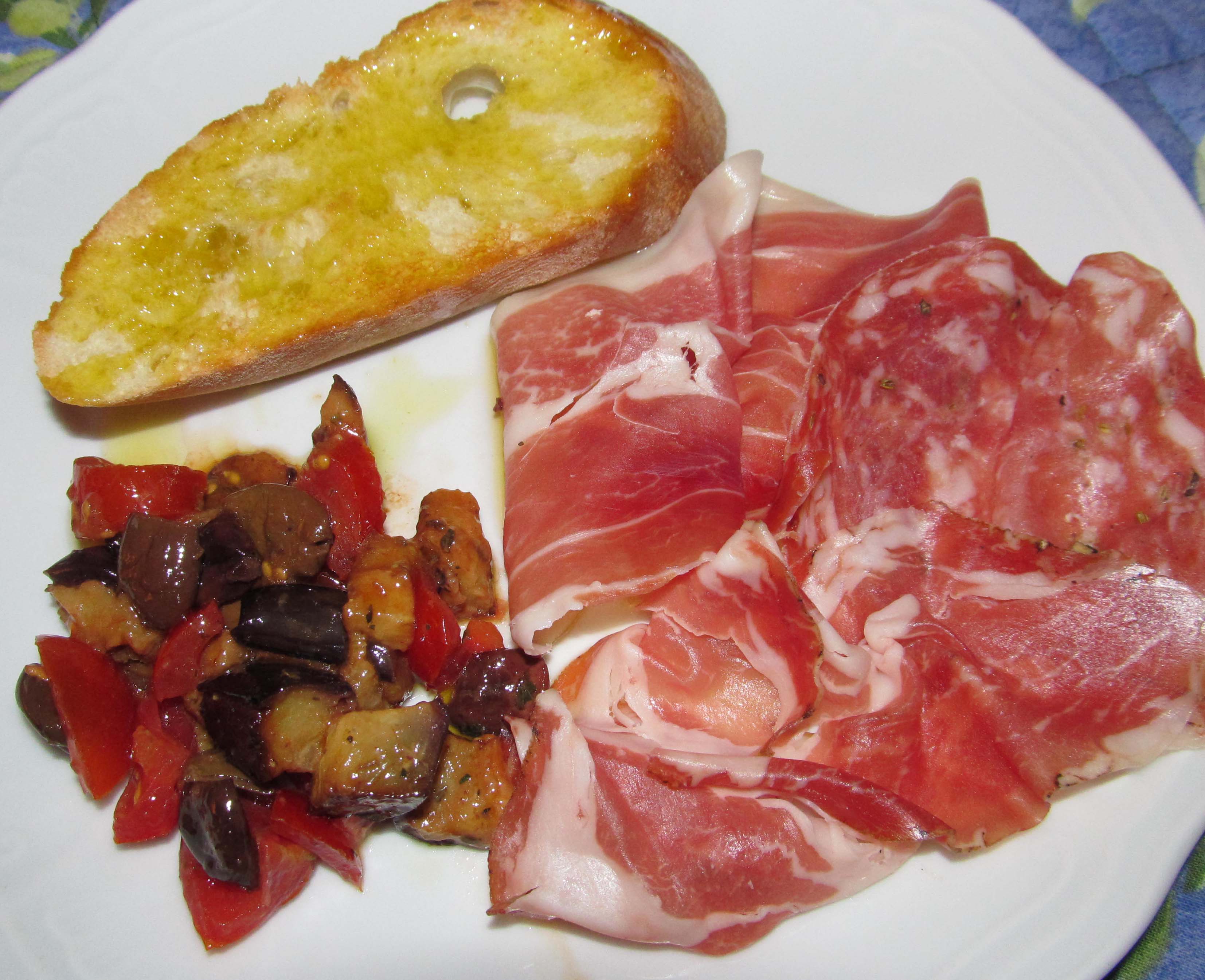
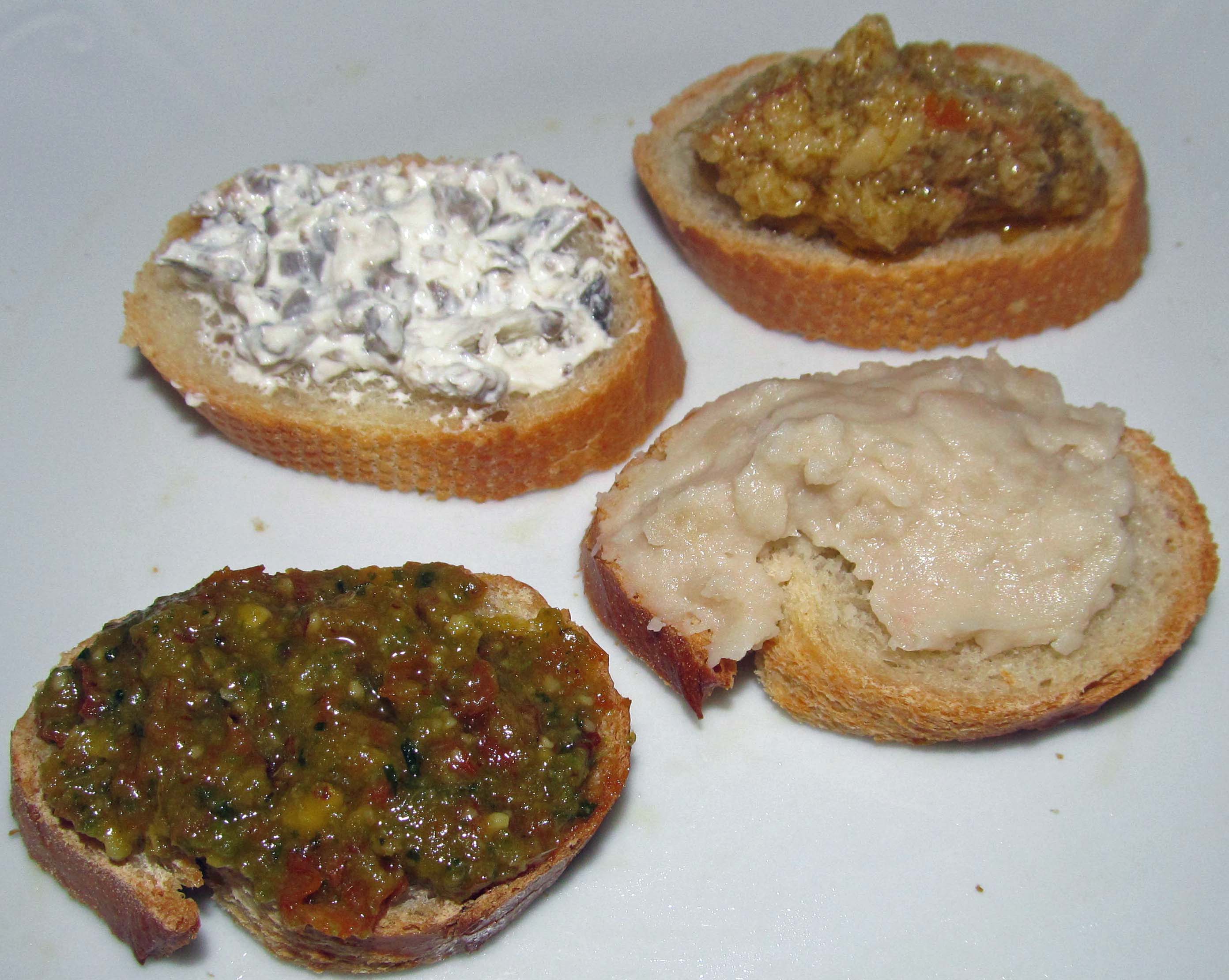
Since we had all that great bread and olive oil, I figured I’d make a few more-or-less Tuscan (at least Italian) delights.  I made my own riff on caponata (on the plate with the fettunta and some yummy pork-based antipasti) as well as a variety of crostini (green = pesto, less green = artichoke, off white = garlic/bean spread, white speckled = “truffled” cream cheese spread).  YUM, YUM, YUM!!!

To Everything There is a Season

Ciao Readers! (and Happy [early] Birthday Pop!)

The title of this blog refers not to the 1965 hit by the Byrds (originally done by Pete Seeger in 1962 and taken almost verbatim from the book of Ecclesiastes, later to be quoted by Kevin Bacon in “Footloose”), but to how everything here runs by the calender.  And I mean everything – what you wear, what you eat, whether or not you’re allowed to turn on your radiator and whether or not you can find mosquito repellent in the stores.  Let me explain…

I suppose before moving here I had the vague idea that people in Europe eat more seasonally than most folks in the U.S.  But I don’t think I really appreciated the full extent of that idea.  I always notice here that what I can buy at the market directly relates to what’s being harvested that week – which is actually pretty cool – this August/September was the first time ever I have bought nothing but sweet/ripe cantaloupes – not a dud in the bunch!  However, I had no idea this principle even applied to the available sweets.  When we first got here and would have our “breakfast” pastries in the park, they never seemed to have chocolate-filled ones, just marmalade.  I was really missing the chocolate-filled ones I remembered from my “breakfasts” in Bologna in March.  I have since learned that Italians think chocolate is bad for you in the summer as it is heavy and will make you hot and unhealthy; chocolate is reserved for the fall/winter (and lo and behold – more varieties of chocolate goodies are starting to appear – yay!).

Now, when it comes to food, I think this seasonal perspective makes sense.  But I’m a little less convinced when it comes to other areas of life (less convinced = more spoiled).  For instance, the calender dictates what home supplies you can buy in the stores.  When we first got here in August we bought a trial screen for one of our windows (not knowing if it would fit and serve the purpose of keeping our cat from jumping 4 floors).  We decided we wanted to buy more for the rest of our windows, so when we had the rental car for Greenday the first weekend of September, we drove back to the OBI (Home-Depot “light”).  There were no screens to be found.  As the employee explained to me, it was past August 31 and they were no longer on sale.  Not fully understanding what he meant, I asked when there would be more in, to which he replied “next summer.”  That was the dawning of the realization that you can only buy certain things here at certain times.   I had also been meaning to buy a second oscillating fan for the guest bedroom (should we finally get some guests, hint hint)…

As I surmised at that point, there were no more fans to be had.  It didn’t matter that the temperatures were still reaching into the 90’s – it was September and that was that!   The same held true for mosquito repellent (fyi, mosquitoes are onomatopoeicaly called “zanzare” in Italian – love saying that word).  While all of the mosquito repelling supplies were taken off the store shelves, no one bothered to tell the mosquitoes they don’t exist after October 1st (they’re really bad here, and their calenders are set for sometime in the future).  And then there’s the way people are dressed – it went from mini skirts and 0pen-toed shoes to winter coats and scarves almost overnight – with no transition in between and (from my perspective) a disregard for the actual weather conditions outside.  But I can tell the feeling is mutual – I can’t tell you how many weird looks I get when I go out for my morning run (still in short sleeves – crazy stranieri!).

Today the owners came over to show us how to turn on the gas/water radiator system (it’s amazing how idiot-like we are about some things here).  Lucky for us we don’t really like heat or we may have wanted it turned on before November 1st (which we just learned is the official day the CITY will LET you turn on the heat!).   Oh, no, I forgot to ask the exact date that we need to shut it off….

Until next time!

Someone is happy it’s radiator season:

A Tour of…. less famous stuff

Ciao Readers!

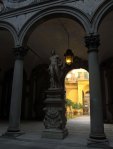
Today is the final installment of semi-educational tours based on the more educational tours I went to with my school.  Unfortunately, I’m done with school for now (but have heard that once I get through with the immigration process I qualify for free Italian lessons – yay!).  So, today we will visit the oldest church in town (San Miniato) as well as the palace where the less-famous Medicis lived (Palazzo Medici Riccardi).  As an added bonus I have thrown in the Bardini Gardens, which Steve and I toured solo.

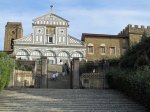
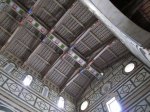
San Miniato (row 1) sits on a prime location – at the top of a huge hill overlooking all of Florence.  Since you’ve probably seen one-too-many shots of the Duomo from this vantage point, I won’t add another one here (just look at the main photo of my blog, above).  I learned that it is not only the oldest church in town, but the only one that has never been restored in any way.  It was built back around 1000 a.d. over the shrine of a beheaded martyr from 250 b.c., San Miniato (duh), who managed to carry his head to this spot after his execution (allegedly).  There were additions made up until the 15th century, but everything you see is original from between those dates.  Notice how the colors on the ceiling are still so vivid – never retouched – pretty cool!  Okay, I have to admit that at about this point in the tour I started to lose focus – the group was large and our teacher was whispering since we were in a church and my mind (and eyes) started to wander…to the weird little inlaid serpent and demon beasts (pictured)….

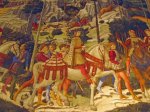
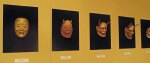
Palazzo Medici Riccardi (row 2) was the semi-lavish home of some of the lesser-known Medici (the more famous ones were living at Palazzo Vecchio and then Palazzo Pitti) and built in the 1400’s.  After a couple a hundred years, the Medici sold it to the Riccardi family, who made some additions, ruining its former perfect cube shape (now it is a museum and government offices).  One thing that struck me in this museum was the amazing fresco “Procession of the Magi” (by Benozzo Gozzoli).  Apparently every January 6th there was a huge procession through town recreating the procession of the 3 Kings – since the Medici were all rich and powerful, they got to play the 3 Kings in the procession and they are the folks pictured in the fresco.  From what my teacher explained, the procession tradition persists to this day, with present-day highfaluting people getting to ride in it.  Somewhere on the top floor of this museum they had a temporary exhibit of 20th century Japanese masks, which I found fascinating (pictured).  My teacher didn’t find them fascinating at all (his interest stops with the 16th century) and I was left behind, missing the rest of the tour (me and my disobedient drummer).

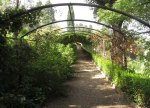
The Bardini Gardens (row 3) are the lesser-known neighbor of the Boboli Gardens.  Like the Boboli Gardens, our Uffizi card gets us free entrance (yay!); unlike the Boboli Gardens, they were not packed with tourists (double yay!).  These gardens were private since they were developed, beginning in the 16th century, all the way up until the last century.  After the death of the last owner in 1965 (Bardini) they were neglected until recently restored and made public.  In addition to being pretty and relatively quiet, they also have an amazing view of Florence….

Thanks for coming on the tour!